About
Drawing on decades of expertise in cancer registration and descriptive epidemiology, the Cancer Surveillance Branch (CSU) plays a central role in generating and disseminating high-quality cancer data to inform national and global policy. CSU ensures that its work remains aligned with the global cancer agenda and responsive to emerging challenges through its mandate from WHO.
CSU makes quality-assured cancer data and statistics freely available to all, and works in close partnership with population-based cancer registries (PBCRs) worldwide to ensure international comparability while advocating their importance in cancer control and cancer research. A critical objective is to measurably improve registry coverage, quality, and networking capacity in countries in transition.
Using the data collected and the statistics generated, CSU conducts international research that illustrates the transitional nature of cancer profiles in person, place, and time. A key research focus is to develop an evidence base that illustrates the health, social, and economic benefits of effective cancer prevention policies.
CSU builds on its long-standing expertise and track record in cancer registration and descriptive epidemiology, ensuring that its work aligns with the evolving global cancer agenda. The key priorities align with IARC’s mission and vision:
- To serve as a reference to the global cancer community in the provision of national cancer indicators;
- To ensure that locally recorded high-quality cancer data from PBCRs are available to inform priorities for national cancer control;
- To describe and interpret the changing magnitude and the transitional nature of cancer risk profiles around the world;
- To advocate the health, social, and economic benefits of preventive interventions, through a systematic quantification of their future impact; and
- To better understand societal inequalities and economic costs of cancer, to enable equitable and sustainable health systems that are capable of effectively reducing the burden of and suffering from the disease at all ages.
CSU informs global, regional, and national priorities for cancer control action via dedicated programmes of work in six complementary areas.

Cancer registry support and development
The Global Initiative for Cancer Registry Development (GICR) aims to markedly increase the coverage, quality, and use of data from PBCRs in low- and middle-income countries. Coordinated by IARC, the GICR brings together major international and national agencies committed to working collaboratively to improve cancer surveillance worldwide. Six IARC Regional Hubs serve as regional coordinating bodies for GICR activities and as the main point of contact for countries within Latin America and the Caribbean, Africa, Asia, and Oceania. GICR Centres of Expertise have been established in 13 countries to further strengthen capacity in cancer registration by delivering specific functions in identified geographical areas in one or more Hubs. The GICRNet uses a Train the Trainer model to form a network of experts, whereby standardized teaching materials for cancer registries are developed jointly between IARC and future trainers across the Hub regions.
The GICR e-learning series aims to create a new legacy of learners by offering free, self-paced education and training on all aspects of cancer registry practice, including an introduction to cancer surveillance, registry operations, data analysis, and dissemination. The series of 16 modules, now available on the WHO Academy Learning Platform, provides guidance aligned to the international standards recommended by the IACR. A certificate of acknowledgement is provided for successful completion of a module under the auspices of the GICR, IARC, and the IACR. A credential as Global Certified Cancer Registrar is issued upon completion of all 16 modules and achieving a passing grade on the final quiz for each individual module within a 12-month period.
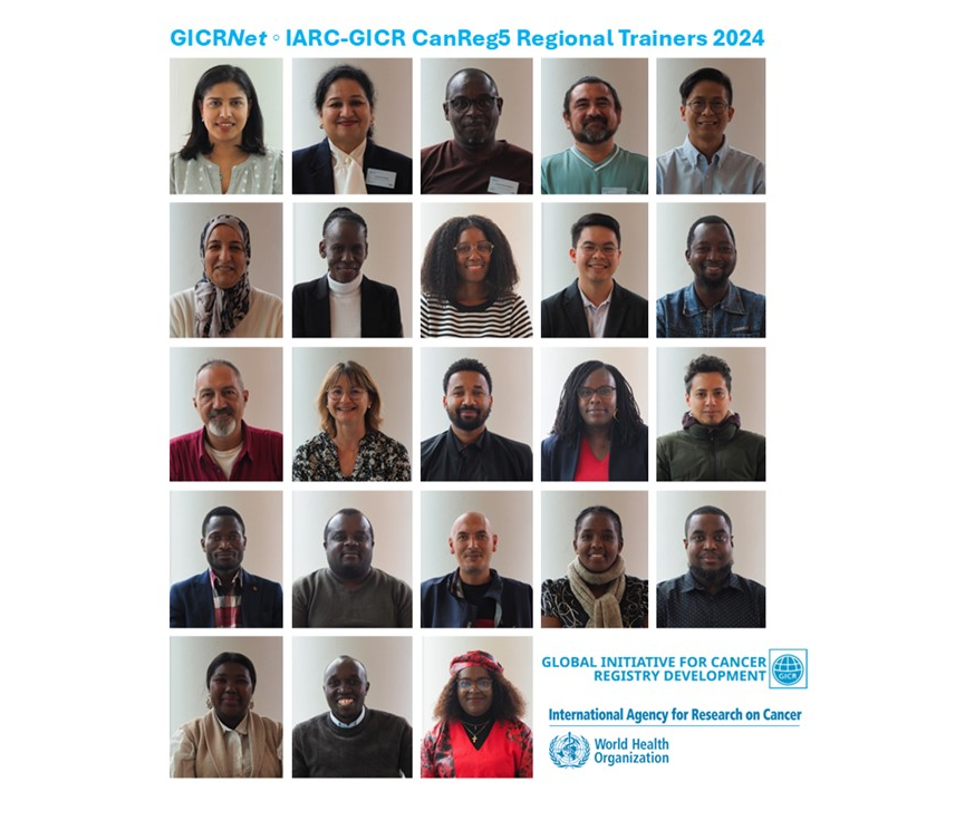
The GICR also increases regional capacity via the creation of formal networks of IARC-GICR Regional Trainers, called the GICRNet. Each network is aligned with a specific topic and is asked to participate in the co-development of educational material, together with helping with dissemination in its respective region to strengthen the support available to local registries. To promote sustainability, IARC selects regional experts in specific subject areas to co-develop educational materials. More than 120 designated IARC-GICR Regional Trainers now serve as a resource to further assist registry staff worldwide, working with the IARC Regional Hubs and Centres of Expertise across different subject areas, including CanReg5, data quality, data analyses, coding and staging, and childhood cancer.
Innovation remains central to the mission of the GICR. Through the E-NNOVATE partnership, a global DHIS2 cancer registry toolkit is being developed to facilitate linkage between electronic medical records and PBCRs using the District Health Information Software version 2 (DHIS2), the world’s largest health information management system.
CSU provides the Secretariat for the International Association of Cancer Registries (IACR), the professional society dedicated to fostering the aims and activities of cancer registries worldwide. This direct link to registries remains vital to CSU’s remit of expanding the availability of quality-assured cancer data. The joint IARC–IACR Cancer Incidence in Five Continents series is a flagship publication that compiles comparable cancer incidence rates across diverse registry populations worldwide.
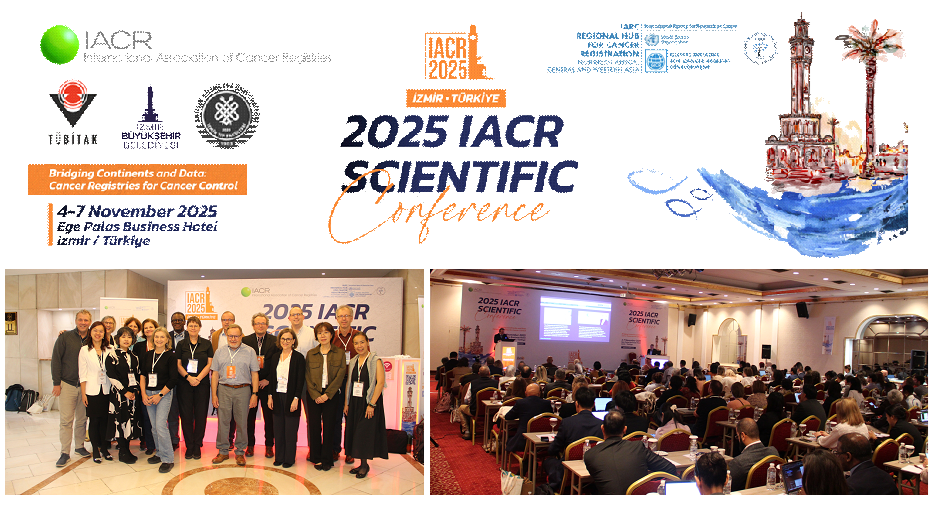
The IACR supports the exchange of information among registries through annual scientific meetings, the development of registry standards (including the International Classification of Diseases, 4th Edition [ICD-O-4] following the completion of the 5th edition of the WHO Classification of Tumours series), and the provision of registry tools (including the CanReg5 operating software for registries, with modules for data entry, quality control, consistency checks, and basic analysis of the data). The most recent IACR annual conferences were held in Beijing, China, in 2024 and in Izmir, Türkiye, in 2025; the 2026 conference will be held in Arusha, United Republic of Tanzania.
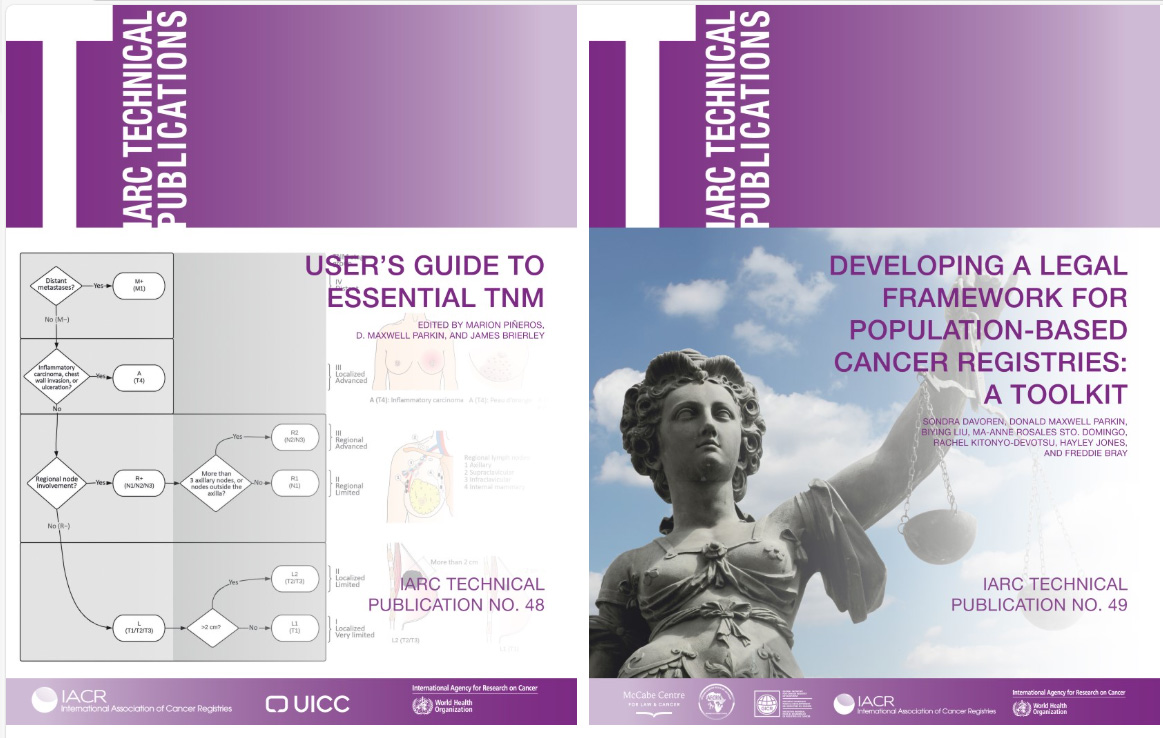
Two recent IARC Technical Publications were published jointly with the IACR and the GICR:
- User’s Guide to Essential TNM – a simplified staging system for PBCRs to complement the full TNM system.
- Developing a Legal Framework for Population-Based Cancer Registries: A Toolkit – supports countries to establish a legal basis for mandatory reporting of data at the PBCR, written in collaboration with the McCabe Centre for Law and Cancer (Australia).
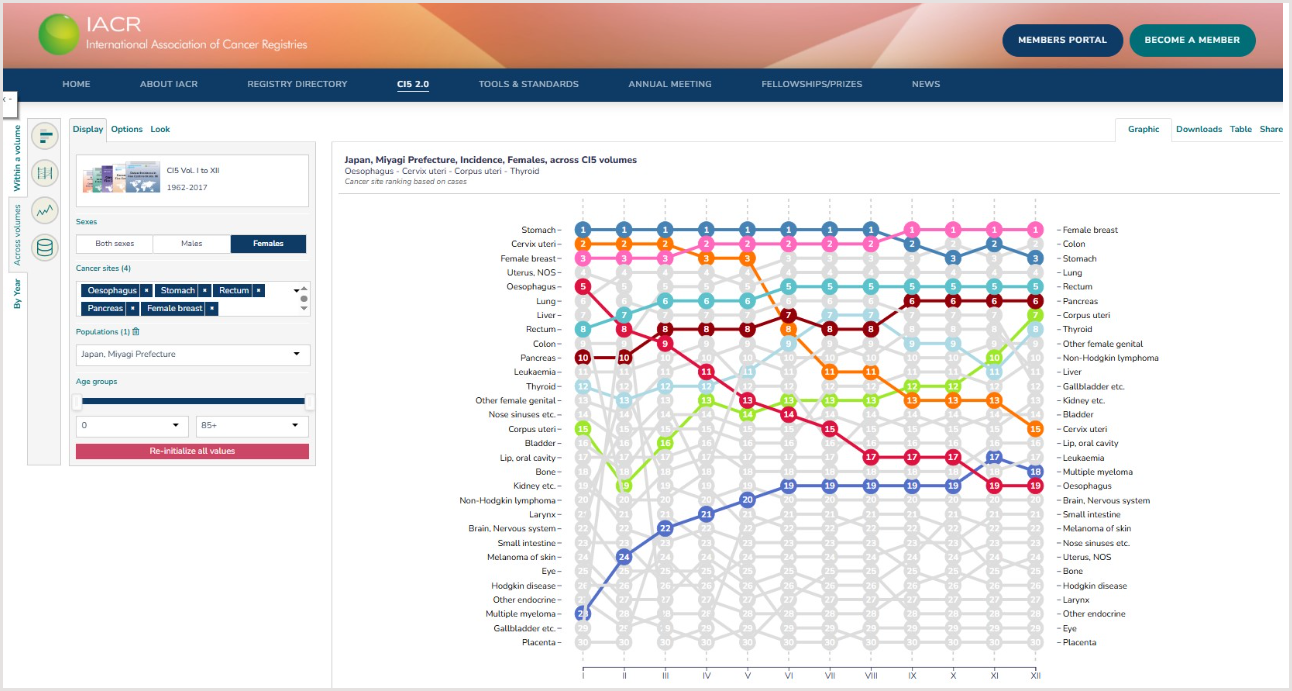
The IACR website was completely revamped with a focus on a global cancer registry directory, as well as CI5 2.0, a data visualization tool to examine registry-specific cancer incidence data by geographical area and over time based on the Cancer Incidence in Five Continents series.
Global cancer indicators
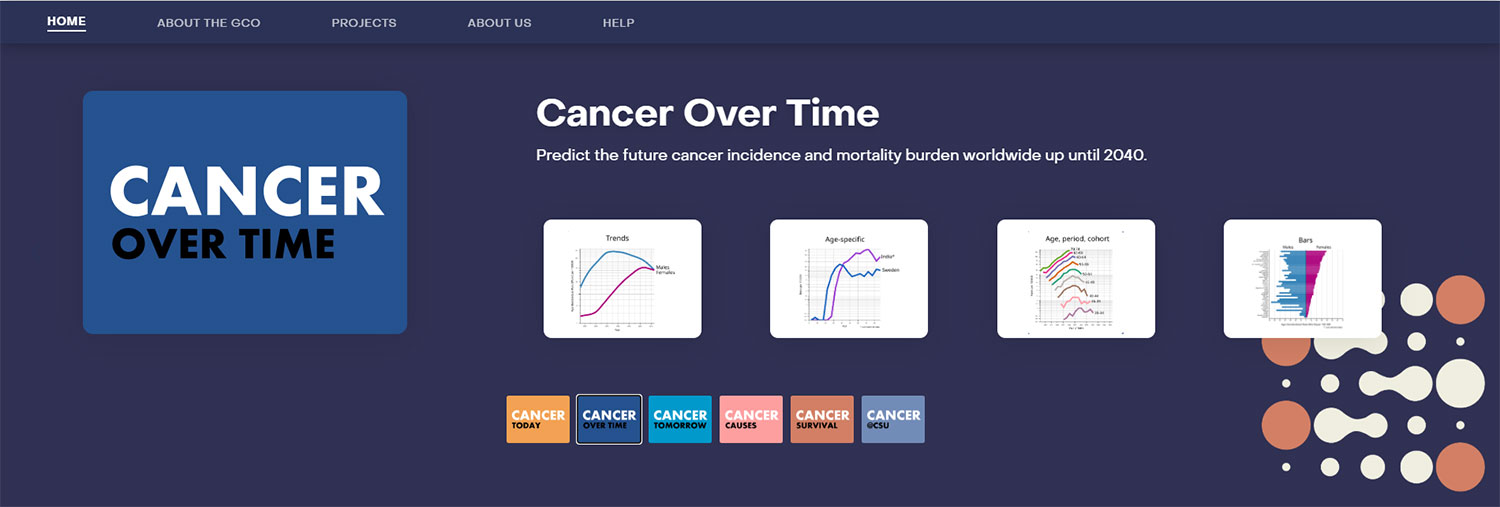
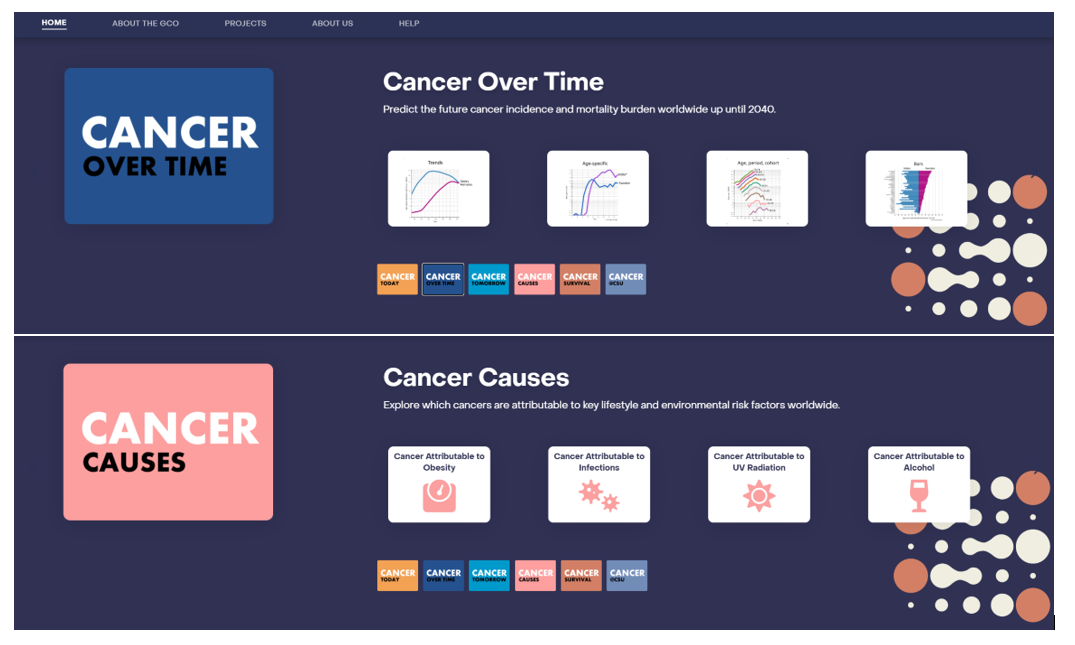
CSU compiles, estimates, and reports cancer statistics through its flagship projects and databases and through high-impact peer-reviewed publications. The Global Cancer Observatory is an interactive web-based platform that presents global cancer indicators of direct relevance to cancer research and policy, developed via CSU’s descriptive research programme. See also the links to CSU websites.
CSU releases the GLOBOCAN estimates of the cancer incidence, mortality, and prevalence burden every 2 years. Drawing on the best available national sources (Filho et al., 2025; PMID:39688499), the data underscore the disproportionate impact of cancer on underserved populations and the urgent need to address global cancer inequities. Accompanying reports describing the diverse cancer profiles by world region were recognized among the top 10 most-cited scientific papers of the 21st century in a recent Nature article.
CSU launched the fourth edition of The Cancer Atlas, a landmark publication designed to inform cancer control strategies across the cancer continuum. The Cancer Atlas synthesizes insights from IARC data and research on cancer burden and risk factors, emphasizing evidence-based measures for prevention and control. CSU also contributes international perspectives on cancer burden and progress in cancer control in the Stat Bite series of the Journal of the National Cancer Institute.
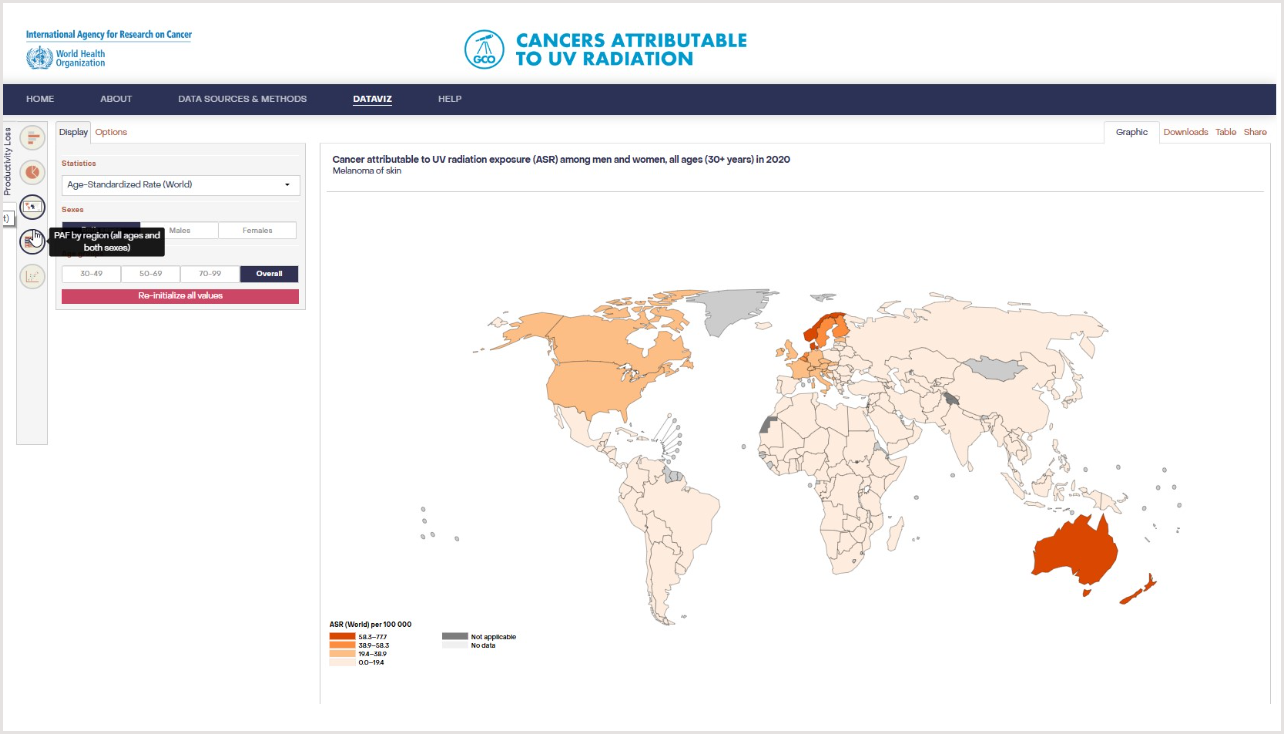
Descriptive epidemiology of cancer
CSU has several major lines of research based on the databases held within CSU, including in-depth assessments of the international variations for specific cancer types, quantification of the major risk factors contributing to the current cancer burden worldwide, and a global assessment of the long-term benefits of preventive interventions. Further information is available here.
View photo
Childhood cancer
The International Incidence of Childhood Cancer (IICC) series is a flagship project of CSU, undertaken in collaboration with the IACR, that produces quality-assured incidence data on cancer in children and adolescents, based on collaborations with paediatric and general cancer registries worldwide. The third volume (IICC-3, IARC Scientific Publication No. 170) is available online and promotes comparative research and supports improvements in the global management of childhood cancer, including the WHO Global Initiative for Childhood Cancer.
With unprecedented efforts to raise awareness of the impact of childhood cancer and the marked disparities in childhood cancer survival observed between low- and high-income settings, CSU’s surveillance and research work is increasingly embedded within the GICR programme and linked to continuing collaborations with WHO in this area.
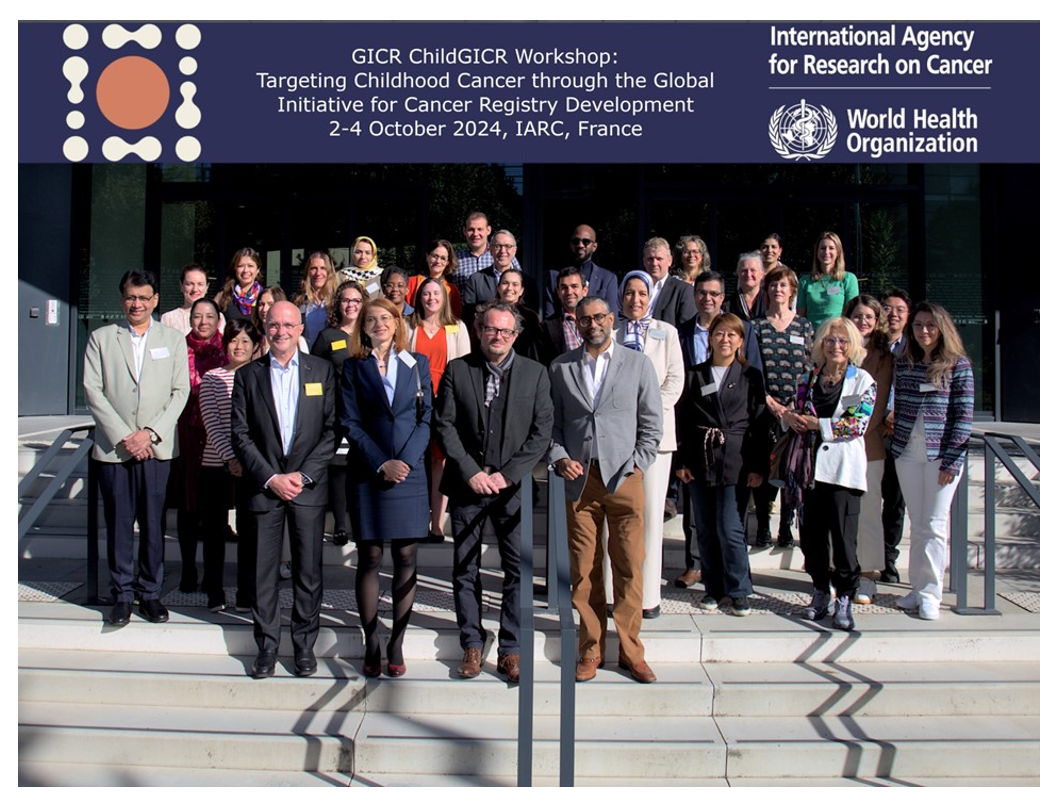
The long-standing bilateral collaborative agreement with St. Jude Children’s Research Hospital (SJCRH), called Targeting Childhood Cancer through the Global Initiative for Cancer Registry Development (ChildGICR), contains workstreams on implementation, education, and research. The aim is to build global capacity for childhood cancer surveillance and, in so doing, help deliver the initiative’s goals of achieving at least 60% survival and reducing suffering for all children with cancer, by 2030. An expansion of the ChildGICR educational programme is being developed with SJCRH and collaborators trained in childhood cancer registration.
Social inequalities and cancer
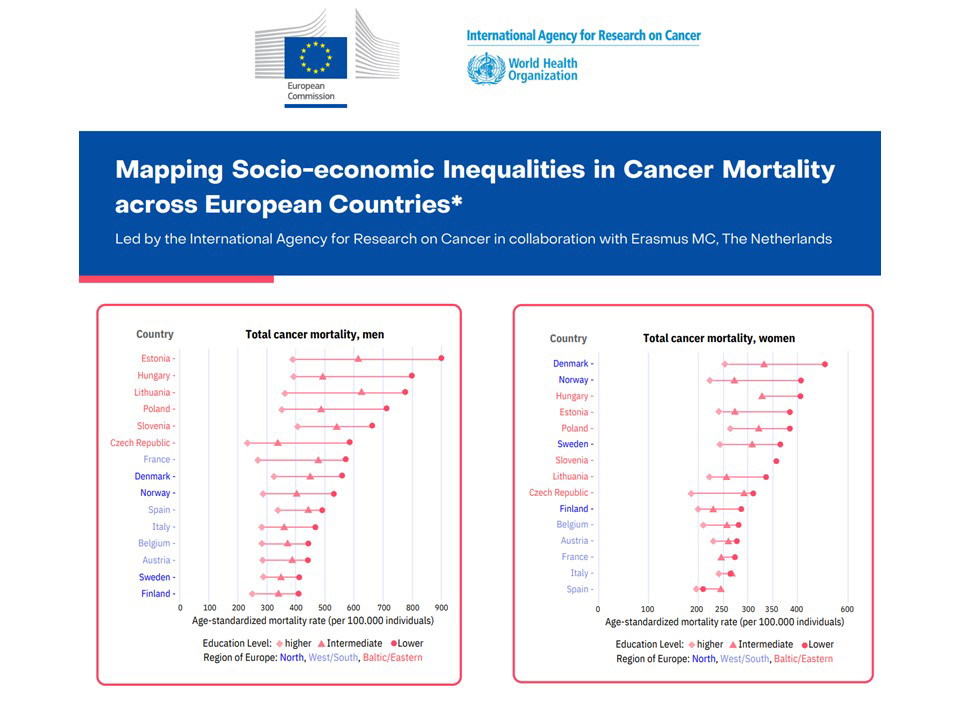
IARC convened an expert workshop of multidisciplinary scientists to identify research priorities for reducing social inequalities in cancer, leading to the production of IARC Scientific Publication No. 168. On this basis, several research projects on social inequalities and cancer have been developed within CSU, including the documentation of social inequalities in cancer between and within countries, with a primary focus on the gradient of the association, as well as temporal and geographical variations. The IARC Cancer Inequalities Team (CIN), led by CSU, seeks to measure, understand, and reduce social inequalities in cancer. CIN compares social inequalities in cancer across populations and within the wider context of the global epidemiological transition of cancer and considers the inefficiencies in the provision of health-care services (e.g. overdiagnosis). Further information is available here.
To mark World Cancer Day 2025, IARC launched a website as part of a European Union (EU) initiative dedicated to reducing cancer inequalities across Europe; more recently, IARC factsheets documenting socioeconomic inequalities in cancer mortality in the EU were launched with the European Commission.
The socioeconomic burden of cancer
The cancer economics group within CSU aims to equip decision-makers with the evidence needed to inform cancer prevention activities. This includes a better understanding of the socioeconomic burden of cancer to national economies and health systems as well as to individuals and households. As part of this work, new indicators are being developed for inclusion in the Global Cancer Observatory. An example is the publication and launch of the global estimates for productivity loss due to premature cancer mortality. A tool is also being developed in collaboration with WHO to assist national policy-makers in identifying value-for-money priority interventions, as part of national cancer planning. Further information on the group’s work is available here.